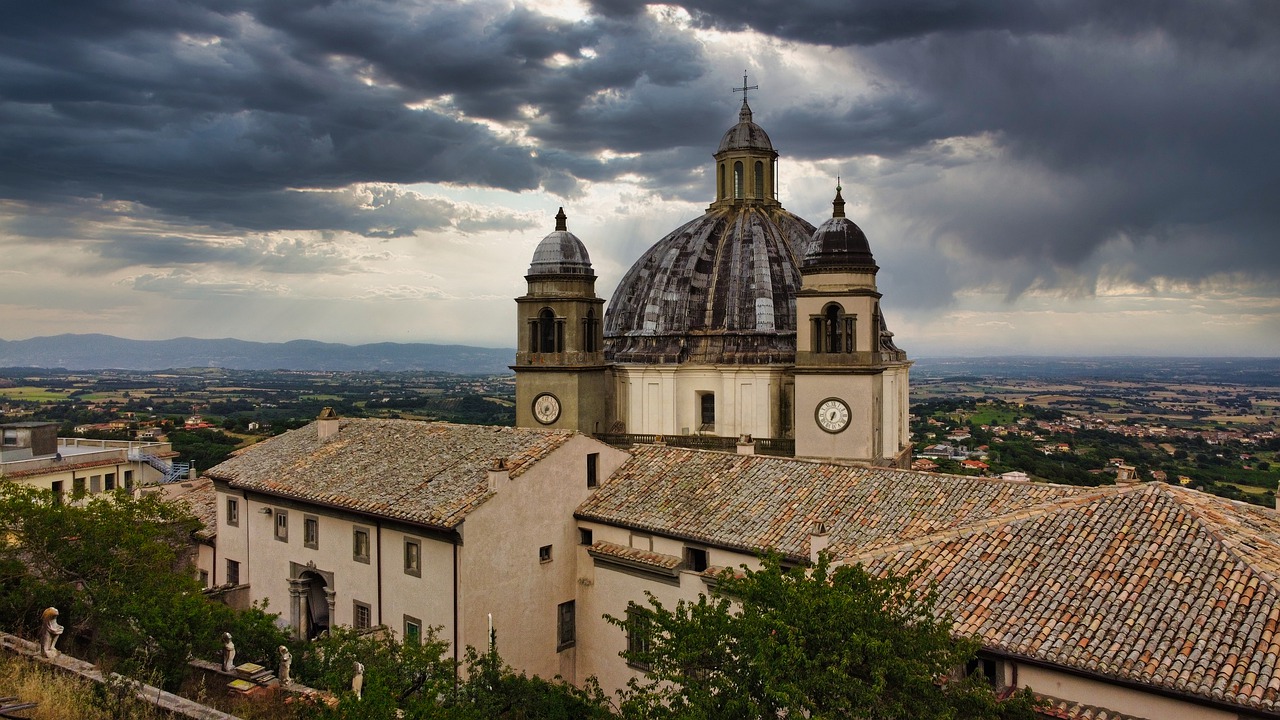
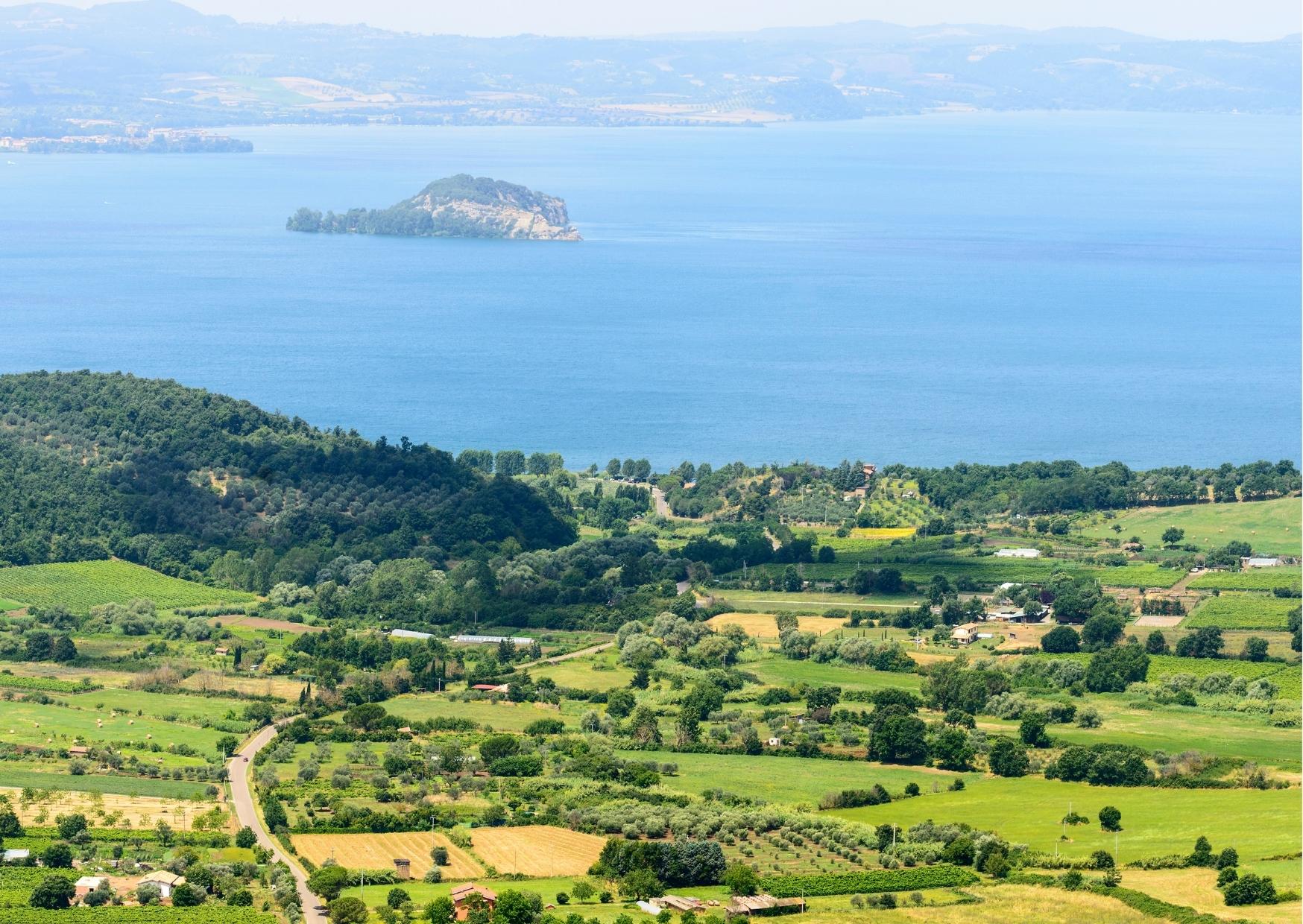
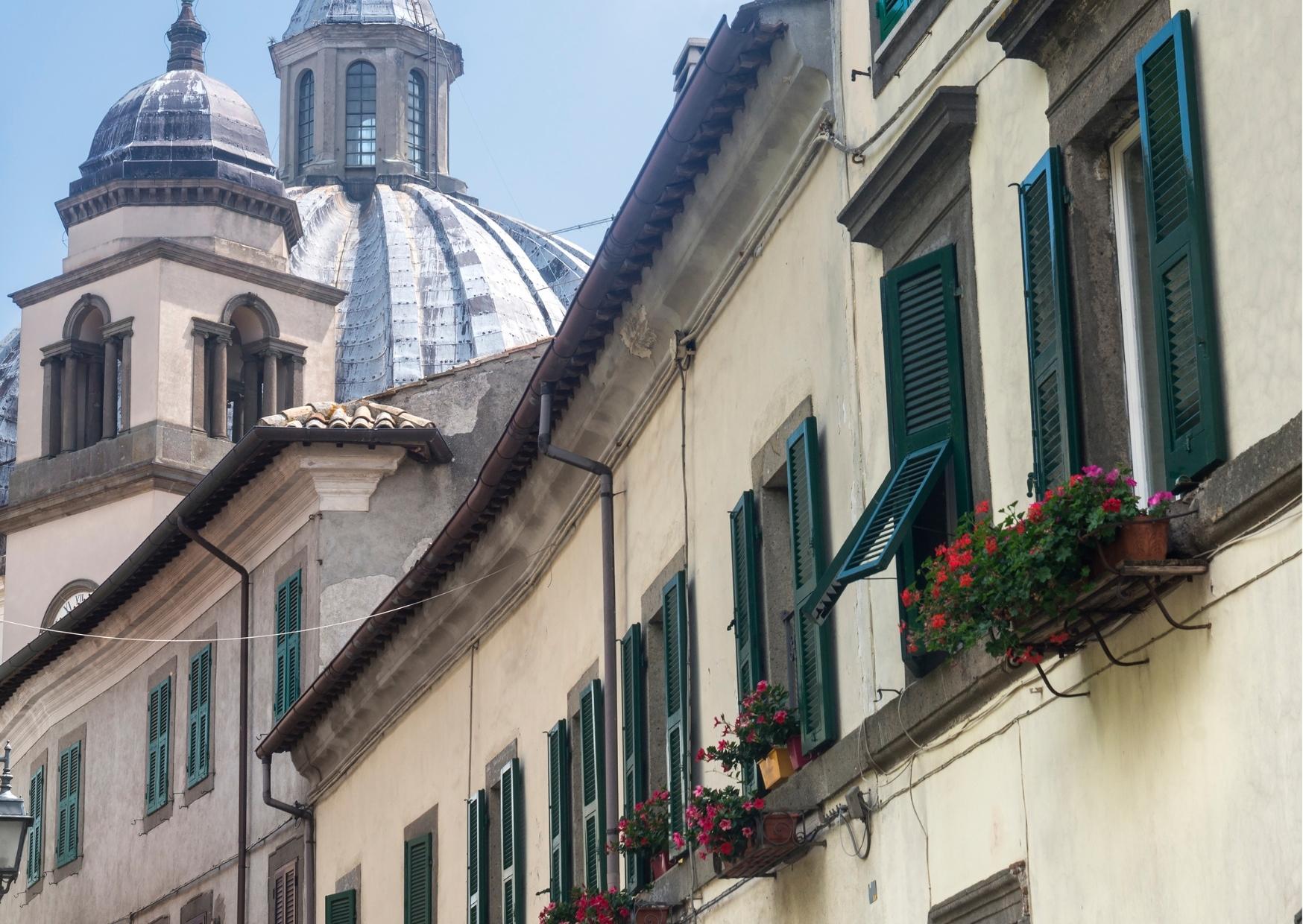
Situated on top of a hill on the side of the crater of Lake Bolsena at 640m above sea level, the city of Montefiascone is a natural landscape that explodes in all its beauty.
Montefiascone is located 15 km from Viterbo and is situated on the SS Cassia (km 98) which then continues to Siena and further beyond the Alps; less than 25 km away is Orvieto, with its imposing Gothic Cathedral that dominates a village rich in history and traditions, which serves as a connection to the Florence-Rome motorway.
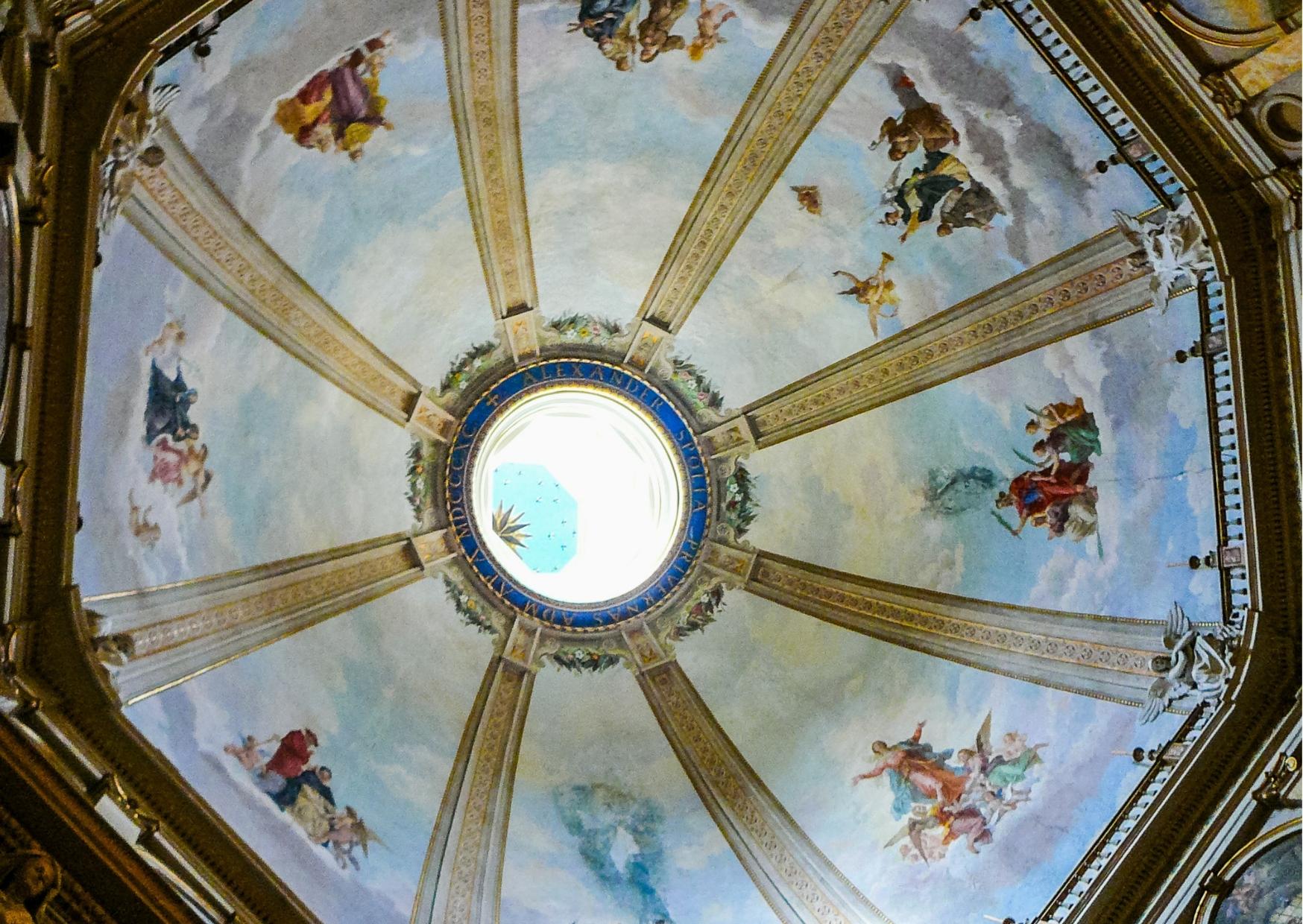
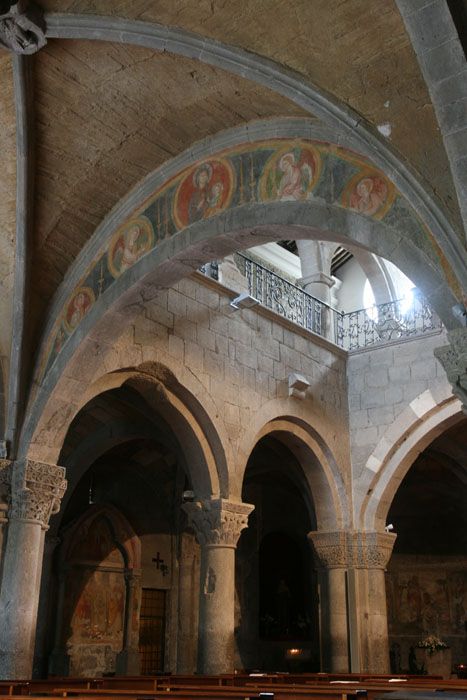
It is possible to lose yourself in long walks along the lakeside, in contact with uncontaminated nature, or enjoy the monuments present in the village, in particular the Rocca dei Papi; the Cathedral of S. Margherita; the Romanesque-Gothic Basilica of S. Flaviano
In the locality of Zepponami there is a small railway station on the Viterbo-Orvieto-Rome line. The city is located on top of a hill on the side of the crater of Lake Bolsena at 640 meters above sea level and from this privileged position you have a view of an unparalleled landscape, which goes from the Tyrrhenian Sea to the Maremma, from the Umbrian Mountains to the Cimini, from the Tolfa Mountains to the lake basin with its beautiful islands Martana and Bisentina. Just 15 km away we find the wonderful Civita di Bagnoregio "the dying city", a soon-to-be UNESCO heritage site and currently part of the association "Most beautiful villages in Italy".
Geographical center of Tuscia, a land rich in history, art and traditions.
The fertile valley that surrounds it contains vegetable gardens, olive groves, vineyards that give rise to the wine production of the acclaimed Moscatello called “Est!Est!!Est!!!”
The legendary story that gives its name to Est Est Est wine
In 1111, Henry V of Franconia, then King of Germany, was on his way to Rome to receive the crown of Holy Roman Emperor from Paschal II. Also accompanying him was the German bishop of Augsburg, Johannes Defuk (or perhaps Deuc, De Fugger, Fugger). Passionate about good wine, the prelate had ordered his servant Martin to precede him along the road, so as to locate the taverns with the best wine and mark them with the word “est” (meaning: “there is”, implying “good wine”). This is what the servant did, beating his master along the way; when he arrived in the town of Montefiascone, in northern Lazio, he found wine so good that he repeated the agreed-upon signal three times with the addition of six exclamation points. So, next to the door of the tavern, he wrote in large letters: “Est! Est!! Est!!!”.
The cardinal appreciated this wine so much that he remained in Montefiascone for three days, before continuing his journey to Rome.
On the way back, however, he could not resist the desire to taste that wonderful wine again; this time, probably, he overdid it because he fell ill and died. He was buried in Montefiascone, in the church of San Flaviano, where it is still possible to visit his tomb, on whose stone is engraved the following inscription, written, it seems, by his faithful servant Martino: < > (“Est! Est!! Est!!! My lord Iohannes Defuk is dead because he overdid it”).
Excerpt from: “Eating Medieval. Medieval Food and Cuisine between History, Recipes and Curiosities” - by Rosella Omicciolo Valentini





 English
  Italian
  German